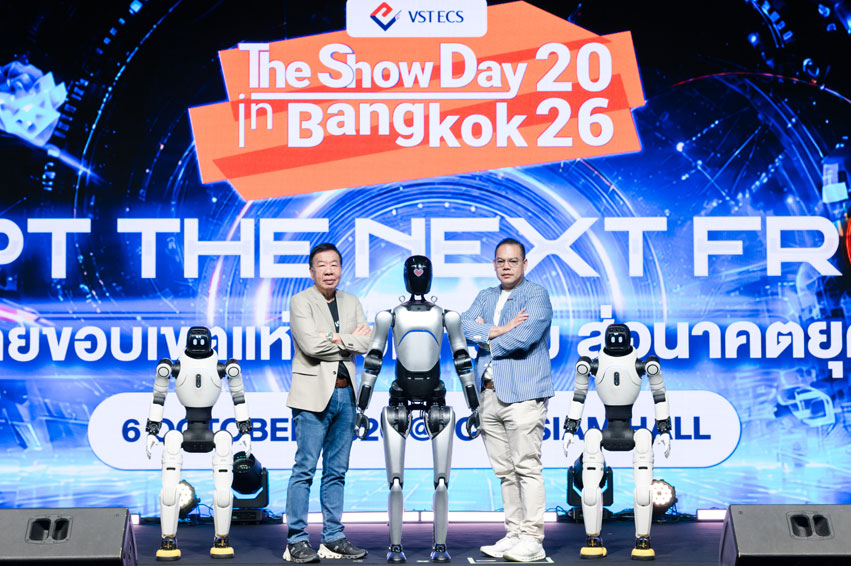
VST ECS Unveils Enterprise IT Strategy at The Show Day in Bangkok 2026, Highlighting AI, Cybersecurity and Data Centers
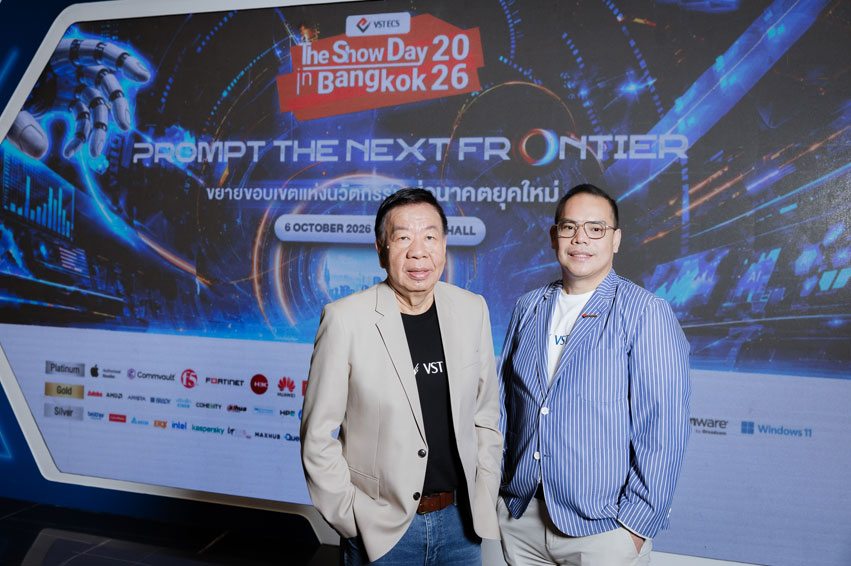
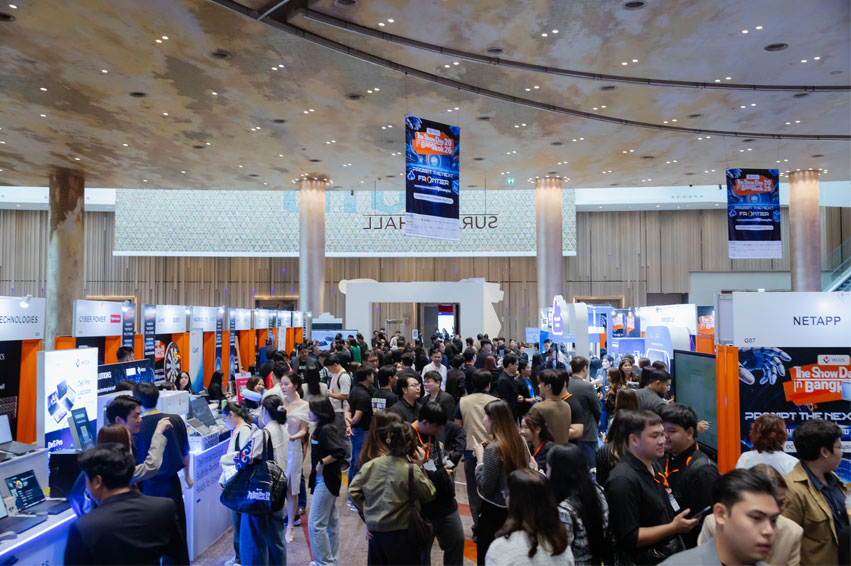
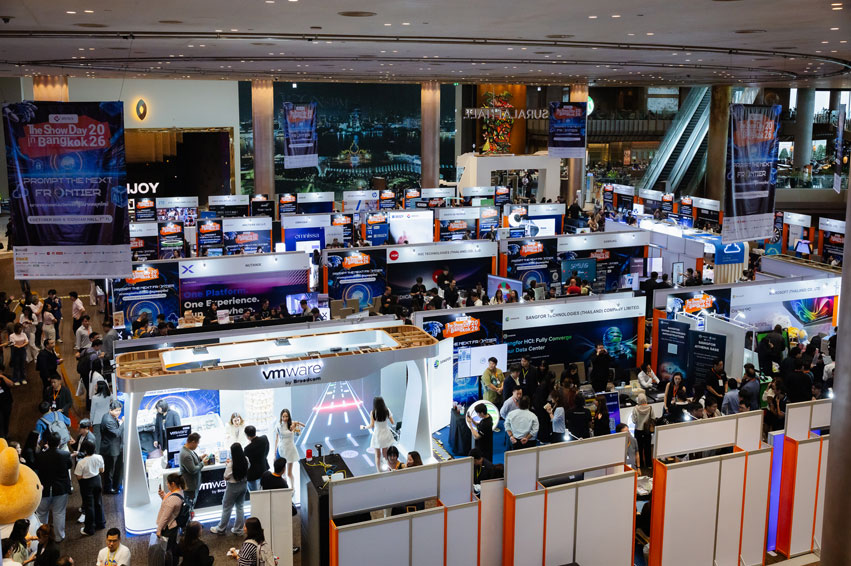
VST ECS (Thailand) Co., Ltd., one of Thailand’s leading ICT distributors and a member of the VST ECS Group, unveiled its enterprise technology roadmap at “VST ECS The Show Day in Bangkok 2026: Prompt The Next Frontier,” one of the year’s largest showcases of enterprise IT innovation. The company identified a global hardware shortage driving server and memory prices to as much as three times their previous levels as a major challenge for the enterprise IT market in the AI era. VST ECS emphasized that Thailand’s private sector must continue investing to remain competitive. The company also noted a temporary slowdown in Thailand’s data center sector amid regulatory, community and environmental concerns, while expressing confidence that greater policy clarity would encourage hyperscale investors to establish operations in Thailand, which it regards as one of the region’s most stable locations.
Mr. Boonchai Asawachaisuvikom, Chief Operating Officer of VST ECS (Thailand) Co., Ltd., who oversees the Enterprise Business Group as well as IT infrastructure and solutions, outlined the company’s strategy at the event, which brought together world-class innovations and digital solutions aimed at advancing Thailand’s IT ecosystem. Held under the theme “Prompt the Next Frontier,” VST ECS The Show Day in Bangkok 2026 reflected a vision of moving beyond prompts that generate on-screen results toward intelligent systems capable of creating tangible value and transforming future business models. The company highlighted three core technology pillars for enterprise transformation: Artificial Intelligence (AI), Cybersecurity, and Infrastructure & Data Centers. The event featured solutions and innovations from leading global technology partners, enabling vendor specialists and product representatives to present their technologies directly to customers and business partners. This year, VST ECS focused on three principal areas of demand in Thailand’s IT market:
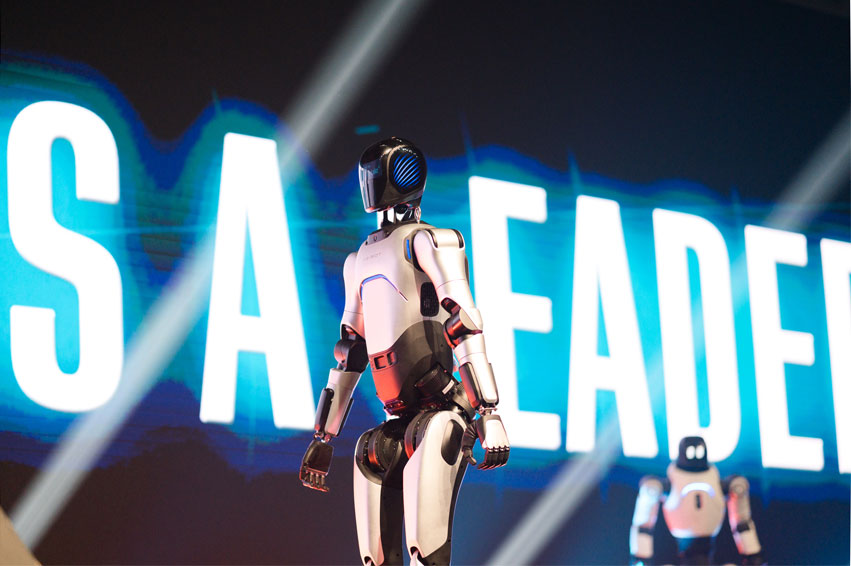
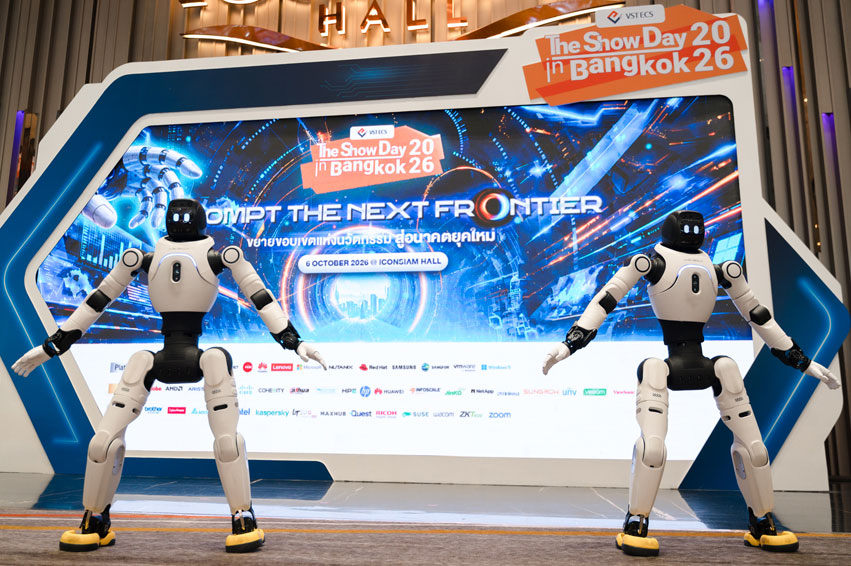
1. AI and Robotics (Physical AI & Robotics): Extending AI beyond software into physical applications, including quadruped robots, commonly known as robot dogs, and humanoid robots. These technologies are beginning to gain real-world adoption in education, engineering inspections in hazardous environments, entertainment and, in the future, elderly care.
Discussing the outlook for AI robotics in Thailand following the launch of Agibot, Mr. Boonchai said the market is developing steadily. However, Thailand continues to face a shortage of software professionals with the expertise to program robots and extend their hardware capabilities. Educational institutions and universities are already using robots for teaching and research while developing project proposals for competitive bidding. In the public sector, government agencies are working with system integrators (SIs) to deploy quadruped robots to inspect underground electrical cable tunnels and other hazardous areas that are inaccessible to people. The events and entertainment sectors are also using robots in exhibitions and dance performances, as well as welcoming distinguished guests at opening ceremonies.
He expressed confidence that the market will eventually expand into healthcare and elderly care applications. The range of functions these robots can perform will depend on the development of customized control software. VST ECS is currently collaborating with three to four software development companies. Available business models include rental and outright purchase, with rental gaining considerable traction. New generations of humanoid robots are also becoming increasingly human-like and significantly more intelligent.
2. Cybersecurity: Advancing AI-powered security systems to counter increasingly sophisticated threat actors who use AI for data theft and ransomware attacks. The company is also expanding its portfolio across multiple brands, giving businesses a broader choice of solutions at different price points.
3. Infrastructure & Data Centers (Infrastructure & Cloud): Data center investment in Thailand is experiencing a temporary slowdown amid stricter environmental requirements and community concerns. Some projects that had previously received permits have been placed under renewed review following complaints from surrounding communities. Key concerns include high electricity consumption and the safety implications of storing approximately 400,000 liters of diesel fuel for backup generators in high-rise buildings. The sector is also contending with hardware shortages, particularly of servers and storage systems, which have pushed server prices to as much as three times last year’s levels. Together, these factors have slowed investment.
Nevertheless, Mr. Boonchai said that clearer government policy and resolution of key regulatory issues including environmental requirements, electricity management and the development of data centers outside urban areas could unlock investment from foreign investors, including Middle Eastern funds and hyperscale service providers. Thailand is viewed as one of the region’s most stable and geographically suitable locations. By comparison, the Middle East faces geopolitical conflict; Singapore has limited capacity for additional projects because of land and electricity constraints; Vietnam and the Philippines face natural-disaster and typhoon risks; and Indonesia is exposed to earthquakes and volcanic activity.
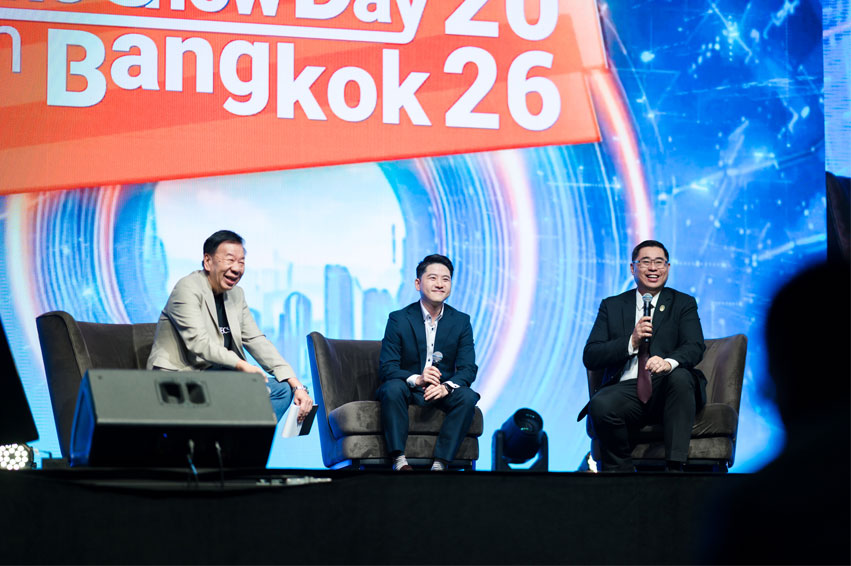
Commenting on the broader enterprise IT market, Mr. Boonchai said total investment continues to grow strongly, supported by sustained demand from private-sector organizations such as banks and telecommunications companies, as well as the need to invest in AI. This growth comes despite hardware prices including servers, memory chips (RAM) and storage systems rising to as much as three times their previous levels because of a global shortage of AI processing chips. Software and licensing costs have also increased by approximately 10–20%. He emphasized that private companies risk falling behind competitors if they do not continue to invest. In response to higher prices and product shortages, VST ECS is coordinating closely with vendors and manufacturers while maintaining inventory at approximately twice its previous level to ensure product availability, despite the resulting increase in costs and working-capital requirements.
Meanwhile, public-sector projects continue to face delays because official reference prices must be specified in terms of reference (TOR) documents. When market prices exceed approved budgets, procurement proceedings may have to be cancelled, and the TOR revised a process that could take several months. One example was last year’s tablet-for-education project: although funding had been allocated, rising product prices prevented the procurement from proceeding and forced the project to be postponed until the following year.
Mr. Boonchai added that demand for AI technology continues to grow with no sign of slowing. Orders placed for NVIDIA processors, for example, currently have lead times of up to nine months because of exceptionally strong global demand.
Concerns that increasingly capable AI systems could pose risks are shared by many countries. From a business-development perspective, however, AI is advancing at extraordinary speed, prompting every sector to place greater emphasis on appropriate governance and controls to mitigate potential negative consequences.
VST ECS has also recorded strong growth in its solar solutions business, where it provides end-to-end services covering solar panels, inverters and battery energy storage systems. Products are distributed through two principal channels: system integrators (SIs) and installation contractors, with VST ECS also offering support through financing programs. This year, the solar business grew by nearly 300% year on year, supported by a government tax-deduction policy under which eligible taxpayers may claim deductions ranging from THB 50,000 to THB 200,000.
VST ECS remains confident that its management capabilities, comprehensive product portfolio and close collaboration with global partners will continue to drive sustainable growth across its digital and enterprise IT businesses in Thailand.
About VST ECS (Thailand)
VST ECS (Thailand) Co., Ltd. (formerly known as The Value Systems Co., Ltd.) was established in Thailand in 1988. Now, VST ECS (Thailand) is a member of VST ECS Group, Headquarter in Hong Kong, leading ICT distributors in Asia Pacific who accessing thru more than 50,000 channels across China, Thailand, Malaysia, Singapore, Indonesia, the Philippines, Myanmar, and Laos.
VST ECS (Thailand) provides a comprehensive range of IT products through its 4 core businesses - Consumer, Commercial, Solutions and Device & Lifestyle. It represents leading-edge products more than 80 brands and has a subsidiary in Myanmar named “VST ECS (Myanmar) Co., Ltd.”, established in April 2014 for focusing on enterprise systems business especially.
For more information about VST ECS (Thailand), please visit www.vstecs.co.th.
7 October 2026